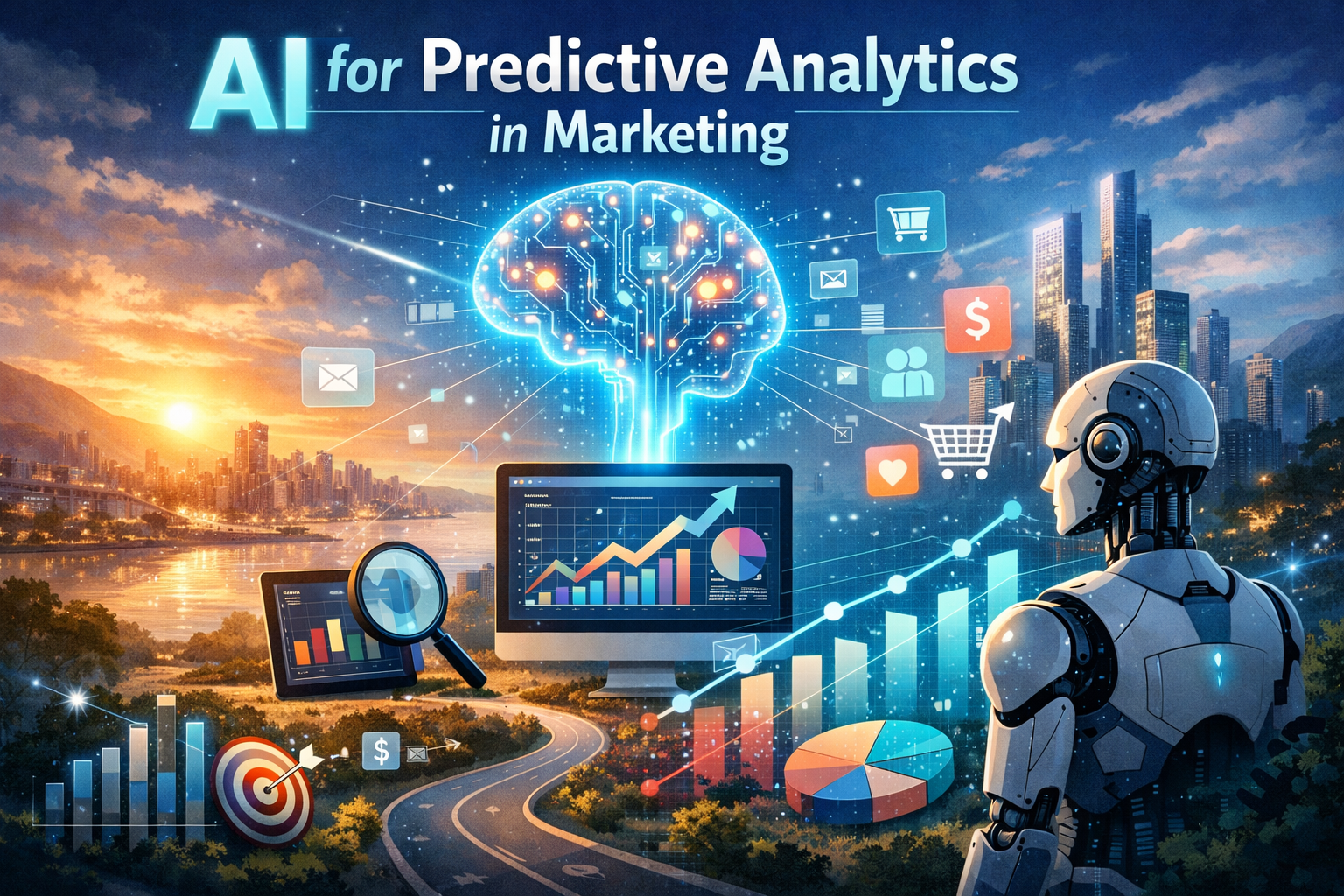
Introduction
Marketing has always been about understanding customers, but traditional methods rely heavily on past performance and intuition. Artificial Intelligence (AI) has transformed this approach by introducing predictive analytics, enabling marketers to anticipate customer behavior, trends, and outcomes with remarkable accuracy. Instead of reacting to the market, brands can now act proactively.
What Is Predictive Analytics in Marketing?
Predictive analytics uses historical data, machine learning algorithms, and AI models to forecast future events. In marketing, this means predicting:
- Customer purchase behavior
- Campaign performance
- Churn probability
- Product demand
- Ideal pricing strategies
AI continuously learns from new data, making predictions smarter over time.
How AI Enhances Predictive Marketing
Traditional analytics focuses on what happened. AI-powered predictive analytics focuses on what will happen next.
Key enhancements include:
- Real-time data processing: AI analyzes millions of data points instantly.
- Pattern recognition: It identifies hidden trends humans often miss.
- Automation: Predictive insights are generated without manual effort.
- Accuracy improvement: Models refine themselves as more data flows in.
Key Applications of AI Predictive Analytics in Marketing
1. Customer Segmentation
AI groups customers based on behavior, preferences, and intent rather than basic demographics. This leads to highly targeted marketing campaigns with better engagement.
2. Personalized Marketing
Predictive models determine what content, product, or offer a customer is most likely to respond to—before they even ask for it.
3. Lead Scoring
AI predicts which leads are most likely to convert, allowing sales and marketing teams to focus their efforts where it matters most.
4. Campaign Optimization
AI forecasts campaign performance and suggests adjustments in timing, channels, and messaging to maximize ROI.
5. Customer Retention
Predictive analytics identifies early signs of churn, enabling brands to take preventive action with personalized incentives or support.
Benefits of AI-Driven Predictive Marketing
- Higher conversion rates
- Reduced marketing costs
- Improved customer experience
- Smarter budget allocation
- Faster decision-making
Brands using predictive analytics gain a strong competitive advantage by staying ahead of customer needs.
Challenges and Considerations
While powerful, AI predictive analytics requires:
- High-quality data
- Ethical data usage and privacy compliance
- Skilled implementation
- Continuous monitoring of AI models
When implemented responsibly, the benefits far outweigh the challenges.
The Future of Predictive Analytics in Marketing
As AI continues to evolve, predictive analytics will become more intuitive and autonomous. Future marketing systems will not only predict outcomes but also execute strategies automatically, creating truly intelligent marketing ecosystems.
Conclusion
AI-powered predictive analytics is reshaping modern marketing by replacing guesswork with data-driven foresight. Businesses that adopt this technology today will be better equipped to understand customers, optimize campaigns, and drive sustainable growth tomorrow.